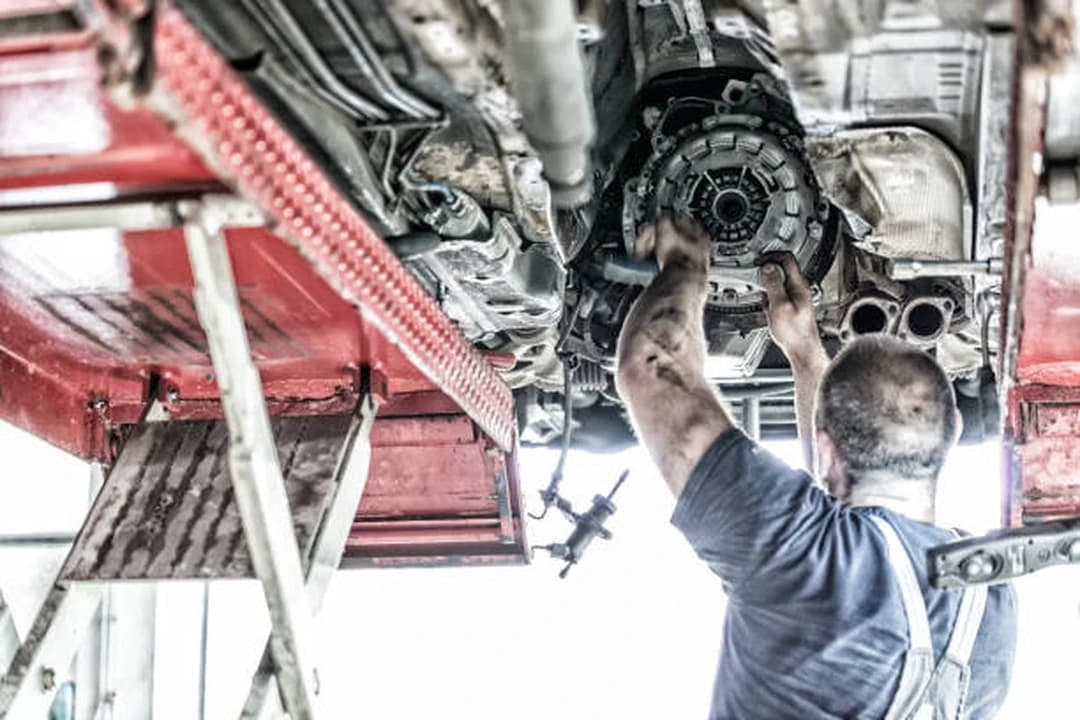
A slipping or heavy clutch, or a bite point that's crept to the floor, usually means the clutch is worn. We replace the clutch — and the dual-mass flywheel where needed — with quality parts.
You get a fixed price up front and a warranty on the work.
Common symptoms
How a clutch tells you it's going
Slip is the clearest sign: the revs climb but the car doesn't accelerate to match, most obvious in a high gear under load or going uphill. A bite point that has crept up towards the top of the pedal travel, a pedal that has gone heavy or vibrates, judder as you pull away, or difficulty selecting gears all point the same way. A rumbling that changes when you press the pedal usually means the release bearing.
Why the flywheel matters
Most modern cars use a dual-mass flywheel, which absorbs engine vibration with internal springs. They wear out — and a worn one causes rattling at idle, judder, and will chew through a brand-new clutch. Because the gearbox has to come out either way, checking the flywheel while it's accessible is straightforward; replacing it later means paying the same labour twice. We measure it and only replace it if it's actually worn, and we'll show you why if it is.
What the job involves
The gearbox is separated from the engine to reach the clutch. The friction plate, pressure plate and release bearing are renewed as a kit — mixing old and new components is a false economy. The flywheel is inspected and machined or replaced if needed, the spigot bearing checked, and the input shaft splines cleaned and lubricated correctly. On hydraulic systems the slave cylinder is checked, since a failing one will imitate a worn clutch.
Getting the most out of the new one
Clutch life depends heavily on how it's driven. Riding the pedal, holding the car on the clutch at junctions instead of the brake, and slipping it excessively when pulling away are what wear them out early. A clutch treated well can last well over 100,000 miles; the same clutch treated badly can be finished in a fraction of that.
How we do it, step by step
- 01
Confirm the fault
Road test to verify it's the clutch and not a hydraulic or gearbox issue.
- 02
Remove the gearbox
Gearbox separated from the engine to access the clutch assembly.
- 03
Inspect the flywheel
Dual-mass flywheel measured for wear and replaced only if needed.
- 04
Fit as a kit
Friction plate, pressure plate and release bearing renewed together.
- 05
Reassemble and test
Hydraulics bled, bite point checked and road-tested before handover.
What affects the price
- ›Whether the dual-mass flywheel needs replacing as well
- ›Front or rear wheel drive, and how accessible the gearbox is
- ›Whether the slave or master cylinder also needs renewing
- ›Parts cost for your specific vehicle
Typical turnaround: Usually 1–2 working days
Warranty: Clutch and flywheel replacement covered on parts and labour.
Rebuild, reconditioned or replacement — which is right?
The cheapest route depends on your engine. Here's how the three options compare — we'll advise honestly once we've seen it.
| Option | Typical price | Time | Best when |
|---|---|---|---|
| Engine rebuild | From £1,200 | 2–4 days | The block is sound and you want to keep your original engine |
| Reconditioned engine | From £900 | 2–5 days | Your engine is beyond economical repair |
| Engine replacement | On quote | 1–3 days | You need the fastest route back on the road |
Prices are indicative starting points. We confirm one fixed price before any work begins.
Frequently asked questions
How much is a clutch replacement?
It depends on the vehicle and whether the flywheel needs replacing. Enter your reg for a fixed quote.
Do I need a new flywheel too?
Not always — we check the flywheel and only replace it if it's worn, and we'll tell you before we do.
How long does it take?
Most clutch jobs are completed within a day or two.
How do I know if my clutch is worn?
The clearest sign is slip — revs rising without matching acceleration, especially uphill or in a high gear. A high or vibrating bite point, judder, or difficulty selecting gears also point to it.
Do I always need a new flywheel?
No. We measure the dual-mass flywheel while the gearbox is out and only replace it if it's genuinely worn — but if it is worn, replacing it now avoids paying the same labour twice.
How long should a clutch last?
It depends far more on driving style than mileage. Treated well, well over 100,000 miles is achievable; riding the pedal or holding the car on the clutch at junctions wears them out much faster.
Can a clutch problem be something else?
Yes — a failing hydraulic slave or master cylinder can imitate a worn clutch closely. We road-test and check the hydraulics before recommending a clutch replacement.
Will you road-test it afterwards?
Always. The hydraulics are bled, the bite point set and checked, and the car road-tested before you get it back.