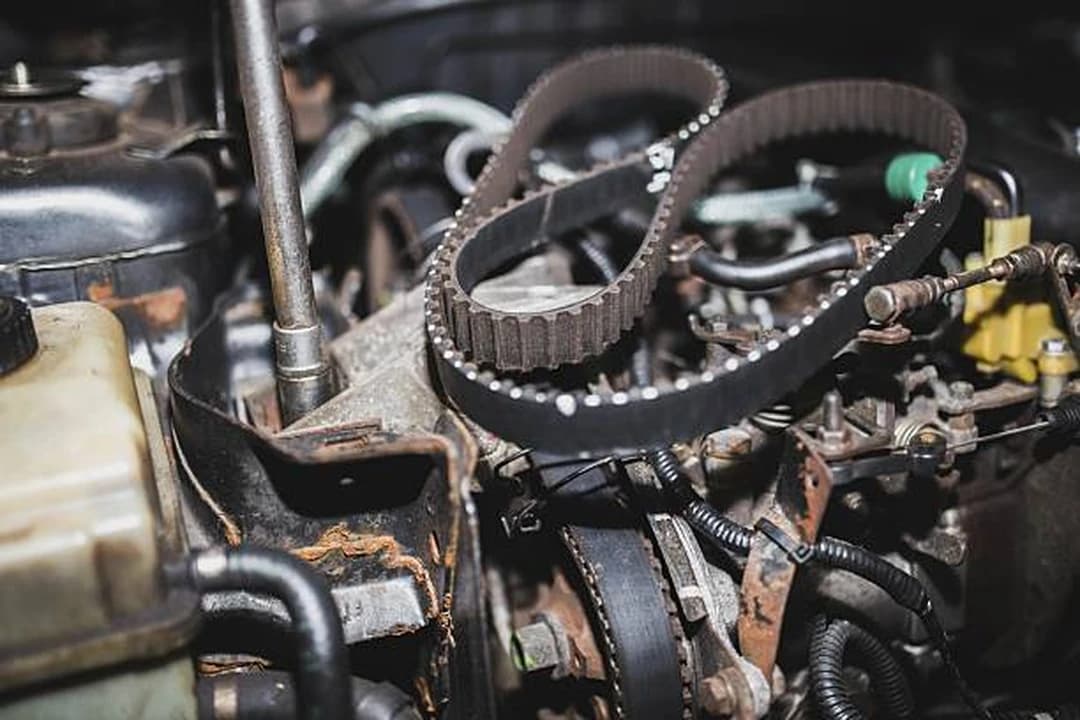
A snapped timing belt can wreck an engine, so replacing it on schedule is cheap insurance. On many modern engines the belt runs in oil (a 'wet belt'), and these break down early — shedding material that blocks the oil pickup and starves the engine.
We replace the belt and tensioners, renew the water pump if it's driven by the belt, and check the oil pickup on wet-belt engines.
Common symptoms
Why the timing belt matters more than any other belt
The timing belt keeps the crankshaft and camshaft turning in step so the valves open and close at exactly the right moment. On the majority of modern engines — known as interference designs — there isn't enough clearance for the pistons and valves to coexist if that timing is lost. When a belt snaps, the pistons hit open valves at speed. Bent valves, damaged pistons and a wrecked cylinder head are the usual result, turning a routine service item into an engine rebuild.
Wet belts: the newer problem
Manufacturers moved the belt inside the engine on several modern units — the Ford 1.0 EcoBoost and the PSA 1.2 PureTech being the most common in the UK — where it runs submerged in engine oil. The theory was reduced friction and longer life. In practice these belts degrade, and as the rubber breaks down it sheds material into the sump. That debris migrates to the oil pickup strainer and blocks it, starving the engine of oil pressure. The failure mode isn't just a snapped belt — it's oil starvation, which destroys bearings and can write off an otherwise healthy engine.
What we replace and why
Replacing the belt alone is a false economy. The tensioner and idler pulleys wear at the same rate and a seized one will shred a brand-new belt, so they're renewed as a kit. On engines where the water pump is belt-driven it comes off anyway, and the labour to go back in later costs far more than the pump does now. On wet-belt engines we also inspect the sump and oil pickup for shed material, because a fresh belt above a blocked strainer solves nothing.
How to know when yours is due
Intervals vary widely — some engines are 60,000 miles, others 100,000, and many have an age limit that catches cars doing low mileage. Wet belts frequently need doing earlier than the original schedules suggested, and several manufacturers have revised their intervals downward. A rattle or whirr on start-up, an oil warning light on a wet-belt engine, or simply not knowing when it was last done are all reasons to have it checked. Enter your registration and we'll tell you what your engine needs.
How we do it, step by step
- 01
Confirm the interval
We identify your exact engine and confirm the correct belt type and interval.
- 02
Strip access
Covers, ancillary belts and mounts removed to reach the timing case.
- 03
Renew as a kit
Belt, tensioner and idlers replaced together — plus the water pump if belt-driven.
- 04
Check the oil pickup
On wet-belt engines the sump and pickup strainer are inspected for shed belt material.
- 05
Time and test
Timing set to specification, engine run up and checked before handover.
What affects the price
- ›Whether it's a conventional belt or a wet belt (belt-in-oil)
- ›How much has to come off to reach the timing case on your engine
- ›Whether the water pump is belt-driven and due at the same time
- ›Whether the oil pickup needs cleaning or the sump dropping on a wet-belt engine
Typical turnaround: Usually same day to 2 working days
Warranty: Belt, tensioner and pump replacement covered on parts and labour.
Rebuild, reconditioned or replacement — which is right?
The cheapest route depends on your engine. Here's how the three options compare — we'll advise honestly once we've seen it.
| Option | Typical price | Time | Best when |
|---|---|---|---|
| Engine rebuild | From £1,200 | 2–4 days | The block is sound and you want to keep your original engine |
| Reconditioned engine | From £900 | 2–5 days | Your engine is beyond economical repair |
| Engine replacement | On quote | 1–3 days | You need the fastest route back on the road |
Prices are indicative starting points. We confirm one fixed price before any work begins.
Frequently asked questions
What is a wet belt?
A wet belt (belt-in-oil) is a timing belt that runs inside the engine, lubricated by oil. Found on engines like the Ford 1.0 EcoBoost and PSA 1.2 PureTech, it degrades early and can block the oil pickup if neglected.
How often should a timing belt be changed?
It varies by engine — typically every 60,000–100,000 miles or by age. Wet belts often need changing sooner. Enter your reg and we'll advise.
How much does a wet belt cost?
It depends on the engine. We quote a fixed price up front — much cheaper than the engine damage a failure causes.
What happens if the timing belt snaps?
On most modern engines the valves and pistons collide, causing serious internal damage. That's why replacing it on schedule is far cheaper than the alternative.
Which engines have wet belts?
Most commonly the Ford 1.0 EcoBoost and the PSA 1.2 PureTech found in Peugeot, Citroen, Vauxhall and DS models — among others. Give us your registration and we'll confirm.
Do you replace the water pump too?
If it's driven by the timing belt, we strongly recommend it — the pump is inexpensive compared with repeating the labour later. If it's not belt-driven, it doesn't need doing.
Why replace the tensioner as well?
The tensioner and idlers wear at the same rate as the belt. A seized pulley will destroy a brand-new belt, so they're renewed together as a kit.
My belt is overdue — how urgent is it?
Treat it as urgent. Belts don't give much warning before they fail, and on a wet-belt engine the oil-starvation risk compounds it. Book it in.