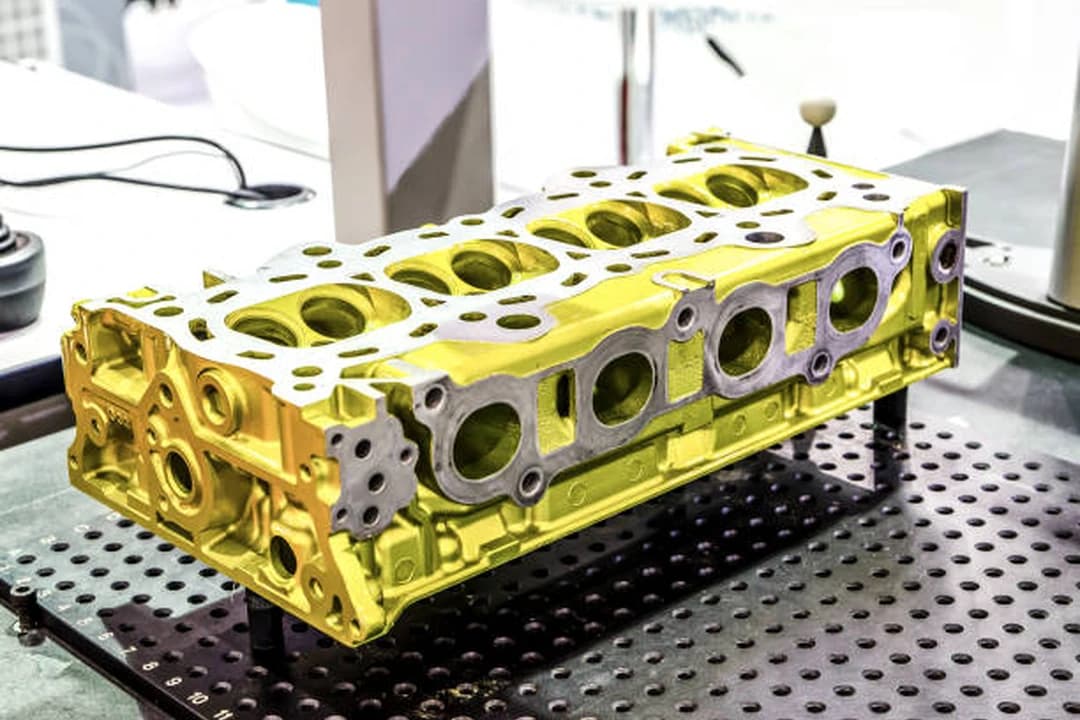
Overheating, coolant loss, white smoke or mayonnaise on the oil cap usually point to the cylinder head or gasket. We pressure- and crack-test the head, skim it back to tolerance, and renew valves and seats where needed.
A new head gasket set goes on with the correct torque procedure, so the repair lasts.
Common symptoms
What goes wrong with a cylinder head
Heads fail in a few predictable ways. Overheating warps the mating face so the gasket can no longer seal, which lets combustion gases into the coolant or coolant into the cylinders. Repeated heat cycling cracks the casting, usually between valve seats or into a water jacket. Valve stem seals harden and let oil down the guides, which is why an older engine smokes on start-up. And the head gasket itself simply gives up under pressure once the surfaces are no longer true.
The symptoms people notice first
Coolant disappearing with no puddle on the drive is the classic one. White smoke from the exhaust that doesn't clear once warm, a mayonnaise-like sludge under the oil cap, bubbling in the expansion tank, or persistent overheating all point the same way. Any of these are worth checking early, because continuing to run a car with combustion gases in the coolant is how a repairable head becomes a scrap engine.
How we test before quoting
We don't diagnose a head gasket by guesswork. A combustion-gas test on the coolant, a pressure test on the system, and a compression or leak-down test across the cylinders tell us whether the problem is the gasket, the head, or something else entirely. Once the head is off, it's crack-tested and measured for flatness before we decide whether it can be skimmed or needs replacing.
Doing the repair so it lasts
A head gasket job done properly means the face skimmed true, the bolts renewed where the manufacturer specifies stretch bolts, and the correct torque-and-angle sequence followed. It also means fixing whatever caused the overheating in the first place — a failed thermostat, a blocked radiator, a weak water pump — because a new gasket bolted onto an unresolved cooling fault will fail again.
How we do it, step by step
- 01
Test
Combustion-gas, pressure and compression testing to confirm the fault before any strip-down.
- 02
Remove the head
The head comes off and the bores and pistons are inspected for damage.
- 03
Crack-test and measure
The head is pressure- and crack-tested and checked for flatness.
- 04
Machine
Skimmed back to tolerance; valves and seats refaced or renewed as needed.
- 05
Rebuild and cure the cause
New gasket set and bolts fitted to the correct torque sequence, and the cooling fault put right.
What affects the price
- ›Whether the head can be skimmed or has to be replaced
- ›Number of cylinders and whether it's a twin-cam or single head
- ›Valve and seat work required once it's apart
- ›Whether cooling components (pump, thermostat, radiator) also need renewing
Typical turnaround: 1–3 working days
Warranty: Head work and gasket replacement are covered on parts and labour.
Rebuild, reconditioned or replacement — which is right?
The cheapest route depends on your engine. Here's how the three options compare — we'll advise honestly once we've seen it.
| Option | Typical price | Time | Best when |
|---|---|---|---|
| Engine rebuild | From £1,200 | 2–4 days | The block is sound and you want to keep your original engine |
| Reconditioned engine | From £900 | 2–5 days | Your engine is beyond economical repair |
| Engine replacement | On quote | 1–3 days | You need the fastest route back on the road |
Prices are indicative starting points. We confirm one fixed price before any work begins.
Frequently asked questions
Can a blown head gasket always be repaired?
Often yes, if caught early. We test the head first — if it's cracked or warped beyond skimming, we'll tell you straight and advise the best option.
How much is a head gasket repair?
It depends on the engine and any collateral damage. We diagnose first, then quote one fixed price.
How long does it take?
Typically 1–3 working days.
Can you tell if it's the head gasket without taking it apart?
In most cases yes. A combustion-gas test on the coolant, a pressure test and a compression or leak-down test will confirm it before we strip anything.
Is it worth repairing or should I replace the engine?
If the head is skimmable and the bores are undamaged, repair is usually far cheaper. We'll tell you which situation you're in once it's tested.
Why did my head gasket fail?
Almost always overheating — a failed thermostat, weak water pump, blocked radiator or low coolant. We fix that cause too, otherwise the new gasket will fail the same way.
Can I keep driving until it's booked in?
Best not to. Running an engine with combustion gases in the coolant or coolant in the cylinders causes rapid additional damage. Call us and we'll advise.
Do you replace the head bolts?
Yes, where the manufacturer specifies stretch bolts they're single-use and always renewed. Reusing them is a common cause of repeat failure.